
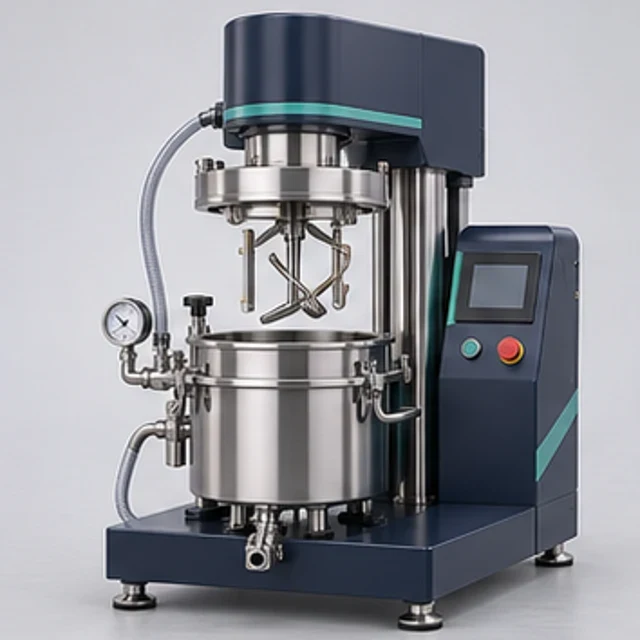
 REPRESENTATIVE CONCEPT
Under Development
Laboratory Vacuum Planetary Mixer
Li-ion Laboratory EquipmentLaboratory slurry mixing under controlled pressure.
AMB-LPM-05Explore equipment ↗
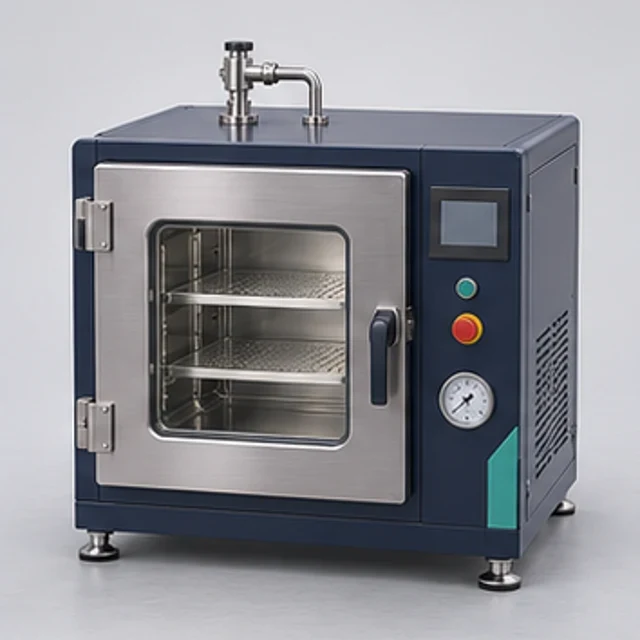
Intended for controlled-pressure research after electrolyte dosing, where removal of trapped gas and penetration of electrolyte into the cell stack need an experimentally defined sequence.
| Technical Parameter | Indicative Configuration |
|---|---|
| Equipment type | Laboratory Vacuum Degassing / Electrolyte Diffusion Chamber; integrated sealing optional |
| Processing principle | Vacuum degassing and electrolyte diffusion; thermal sealing optional |
| Applicable cell format | Pouch cell |
| Cell size class | Up to approximately 180 × 120 × 10 mm, standard reference |
| Sealing length | Optional integrated sealing only: 150 / 200 mm |
| Optional sealing length | Optional integrated sealing only: Application-specific |
| Sealing width | Optional integrated sealing only: 4–6 mm, tooling-dependent |
| Sealing temperature | Optional integrated sealing only: Approx. 50–250°C, laminate-dependent |
| Temperature control | Digital PID for optional integrated sealing module |
| Sealing dwell time | Optional integrated sealing only: Adjustable 0–99 seconds |
| Sealing force | Optional integrated sealing only: Pneumatic, selected design |
| Pneumatic supply | 0.5–0.8 MPa |
| Vacuum level | Preliminary target to −95 kPa gauge |
| Vacuum dwell time | Adjustable 0–9999 seconds |
| Vacuum pump | Suitable external/integrated vacuum unit |
| Chamber construction | Engineered aluminium/stainless-steel enclosure |
| Viewing window | Vacuum-rated engineered transparent panel |
| Sealing jaws | Optional integrated sealing only: Machined heat-conductive tooling |
| Jaw heating | Optional integrated sealing only: Electric resistance heating |
| Jaw alignment | Optional integrated sealing only: Guided upper/lower tooling |
| Thermal sensing | Optional integrated sealing only: Thermocouple / RTD |
| Cell fixture | Adjustable pouch support |
| Operating cycle | Manual loading; controlled degassing/diffusion; sealing only if selected |
| Control system | Vacuum controls; PID / PLC-HMI for selected optional integration |
| Recipe storage | Optional |
| Data logging | Optional |
| Electrical supply | 230 V AC, selected configuration |
| Safety | Vacuum chamber protection, interlocks, hot-surface guarding, emergency stop |
| Application | Laboratory pouch-cell degassing and electrolyte diffusion; optional integrated sealing |
Specifications indicate preliminary equipment configurations. Final technical parameters, performance, material compatibility and supply arrangements will be confirmed following application review and detailed engineering.
Vacuum degassing and electrolyte diffusion remain the primary functions. Integrated pouch-cell heat sealing is optional and application-specific, subject to engineering feasibility and customer requirements; it is not included in the standard chamber. The AMB-LVS model labels describe proposed optional sealing configurations. The −95 kPa target is gauge pressure, not absolute pressure; local ambient pressure and the selected system affect achievable conditions.
Configurable laboratory vacuum degassing and electrolyte-diffusion solutions use an engineered chamber, application-specific pouch support and selected vacuum components. Vacuum exposure and dwell conditions are established for the cell and electrolyte process. Integrated pouch-cell heat sealing can be evaluated as an optional application-specific configuration, with separate sealing tooling, thermal controls and safety review; it is not part of the standard chamber.
Pouch-cell wetting research, electrolyte diffusion studies and investigation of trapped gas in compatible assemblies. Confirm the intended process, materials and acceptance method during application review.
Mechanical interfaces, operating mode and control requirements are defined during engineering review. Available configuration choices depend on the agreed equipment scope.
The primary chamber controls vacuum and dwell conditions for degassing and electrolyte diffusion. PID thermal control and heated jaws apply only if integrated sealing is selected. PLC/HMI, recipes and data logging are configuration-dependent options.
Configuration, component selection and supply feasibility follow the customer application review. Mechanical assemblies, specialist subsystems and integration are confirmed for the agreed scope. Utilities and facility interfaces depend on the selected configuration. This enquiry-led listing does not establish stock, completed manufacture or testing, immediate dispatch, or a confirmed supplier partnership.
External-pressure resistance, chamber structure, door seals and vacuum-rated viewing-window construction require engineering verification. Electrolyte vapour handling, pump compatibility, ventilation and ignition risks require process assessment. Optional sealing temperature, pressure and dwell must be validated against the actual pouch laminate. No hermetic sealing, residual-gas removal or cycle-time guarantee is established.
A documented risk assessment, guarding review, material compatibility check and application-specific operating procedure are required before use. No CE, UL, IEC, hazardous-area approval or other certification is established by this listing. Conformity documentation depends on the agreed scope and destination requirements.
Read the Product Information Disclaimer
Request technical documentation and an application-specific configuration with your enquiry.
This listing represents an intended equipment or engineering offering. Feasibility, configuration and availability require confirmation. Please request the current engineering and supply status.
Share your materials, required capacity, process constraints and acceptance criteria. The team will review feasibility before confirming any custom scope.
REPRESENTATIVE CONCEPTLaboratory slurry mixing under controlled pressure.
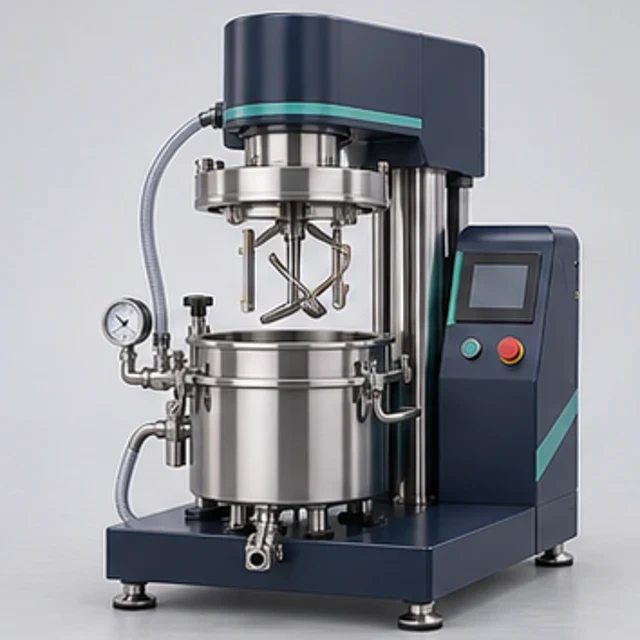 REPRESENTATIVE CONCEPT
Laboratory rotor-stator dispersion.
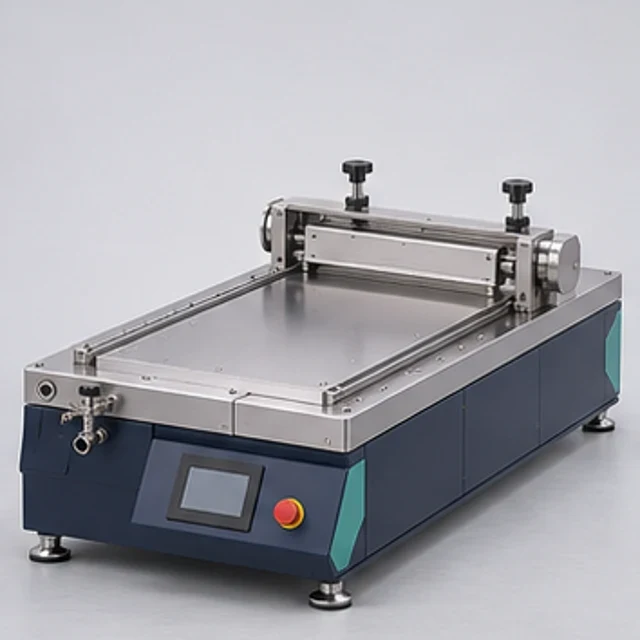 REPRESENTATIVE CONCEPT
Laboratory blade coating of electrode coupons.