
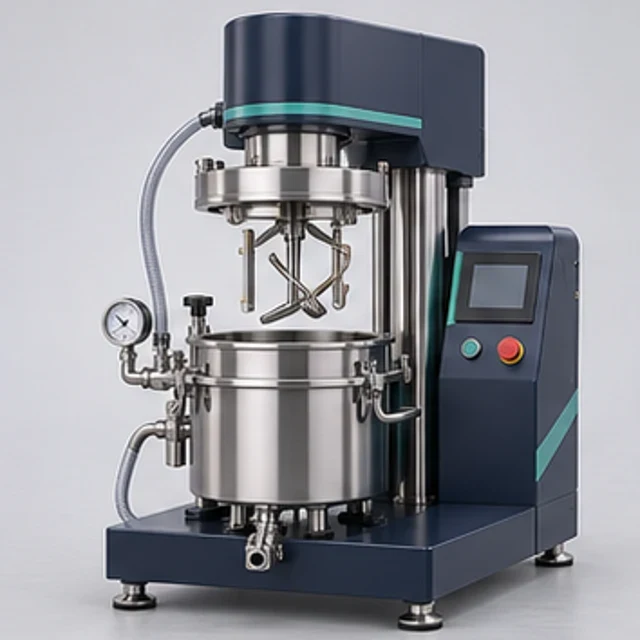
 REPRESENTATIVE CONCEPT
Under Development
Laboratory Vacuum Planetary Mixer
Li-ion Laboratory EquipmentLaboratory slurry mixing under controlled pressure.
AMB-LPM-05Explore equipment ↗
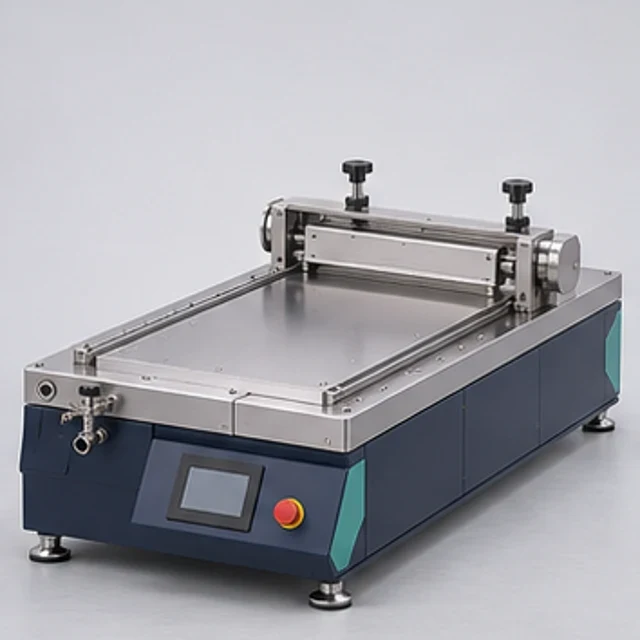
Intended for research coating of electrode slurry onto flat current-collector coupons, with coating-gap and drying effects studied on manageable samples.
| Parameter | Indicative Configuration |
|---|---|
| Equipment type | Automatic Laboratory Doctor-Blade Film Coater |
| Coating method | Motorised doctor-blade coating |
| Coating width | 100–250 mm, model-dependent |
| Standard models | 100 / 150 / 250 mm |
| Coating travel | 300 / 350 / 500 mm, model-dependent |
| Coating speed | Target 1–100 mm/s, adjustable |
| Doctor-blade gap | 0.01–3.5 mm |
| Gap adjustment resolution | Target 0.01 mm |
| Film applicator | Micrometre-adjustable stainless-steel doctor blade |
| Substrate holding | Perforated vacuum chuck |
| Vacuum bed material | Anodised aluminium |
| Vacuum pump | Oil-free, internal or external |
| Heating | Optional heated vacuum bed |
| Heating range | Ambient to 120°C, heated version |
| Temperature control | Digital PID controller |
| Temperature sensor | Thermocouple or RTD |
| Temperature display resolution | Target 1°C |
| Linear motion | Motorised slide with linear guide rails |
| Stroke setting | Digitally adjustable |
| Speed control | Electronic variable-speed control |
| Compatible substrates | Aluminium foil, copper foil, selected film substrates |
| Control interface | Digital controller; touchscreen optional |
| Electrical supply | 230 V AC, 50 Hz, single-phase proposed |
| Safety | Emergency stop, travel limits, electrical protection and hot-surface guarding |
| Application | Laboratory anode and cathode electrode coating |
Specifications represent preliminary configurable design targets. Final parameters, material compatibility, performance and availability will be confirmed after application review and engineering validation.
Blade gap and adjustment or display resolution do not establish finished wet or dry coating thickness, coating uniformity or dimensional accuracy. Results depend on the slurry, substrate and process conditions.
A blade meters slurry as the blade or substrate traverses a flat support. Wet-film formation depends on the gap, travel, substrate flatness and slurry behaviour; the blade gap alone does not establish final dry thickness.
Anode and cathode coupon preparation, slurry coatability studies and small-sample electrode research. Confirm the intended process, materials and acceptance method during application review.
Mechanical interfaces, operating mode and control requirements are defined during engineering review. Available configuration choices depend on the agreed equipment scope.
Discuss manual or automated operation, local HMI, recipe control, PLC interfaces and process data requirements where appropriate. These options require scope confirmation.
Electrical supply, compressed air, cooling, exhaust, vacuum, floor loading and controlled-atmosphere requirements must be assessed against the selected configuration.
Solvent-based coating requires application-dependent vapour extraction and thermal/ignition safety assessment. Heating, electrical protection and substrate/material compatibility require engineering validation. No solvent-safe operation, coating uniformity, dimensional accuracy or certification is established by these targets.
A documented risk assessment, guarding review, material compatibility check and application-specific operating procedure are required before use. No CE, UL, IEC, hazardous-area approval or other certification is established by this listing. Conformity documentation depends on the agreed scope and destination requirements.
Read the Product Information Disclaimer
Request technical documentation and an application-specific configuration with your enquiry.
This equipment is under development. Design details, tested performance and delivery commitments require confirmation. Please request the current engineering and supply status.
Share your materials, required capacity, process constraints and acceptance criteria. The team will review feasibility before confirming any custom scope.
REPRESENTATIVE CONCEPTLaboratory slurry mixing under controlled pressure.
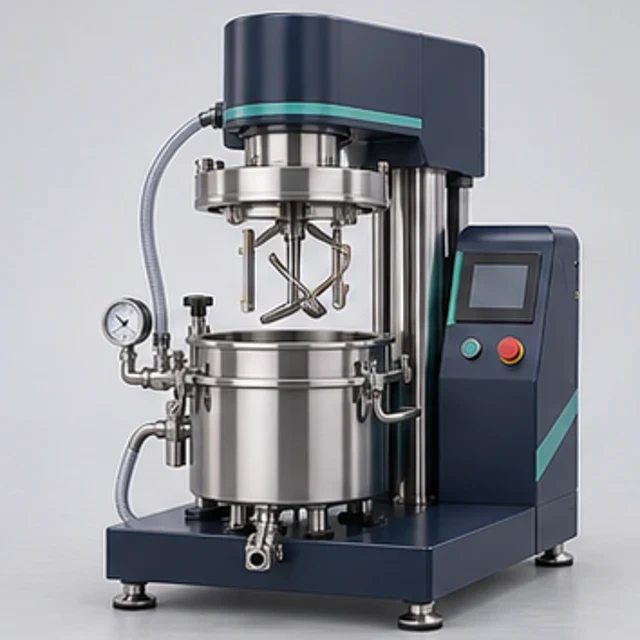 REPRESENTATIVE CONCEPT
Laboratory rotor-stator dispersion.
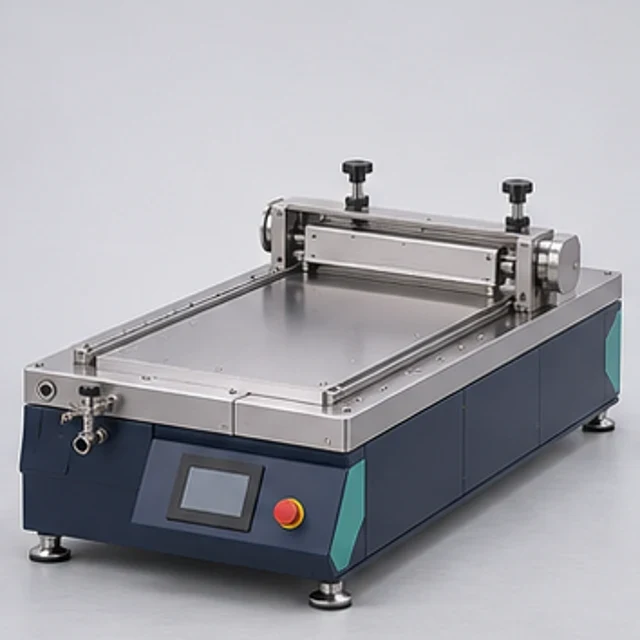 REPRESENTATIVE CONCEPT
Benchtop slot-die coating trials.