
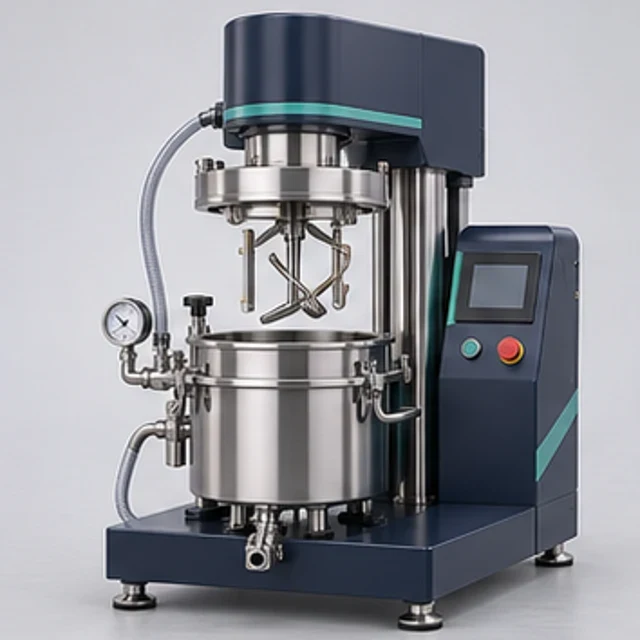
 REPRESENTATIVE CONCEPT
Under Development
Laboratory Vacuum Planetary Mixer
Li-ion Laboratory EquipmentLaboratory slurry mixing under controlled pressure.
AMB-LPM-05Explore equipment ↗
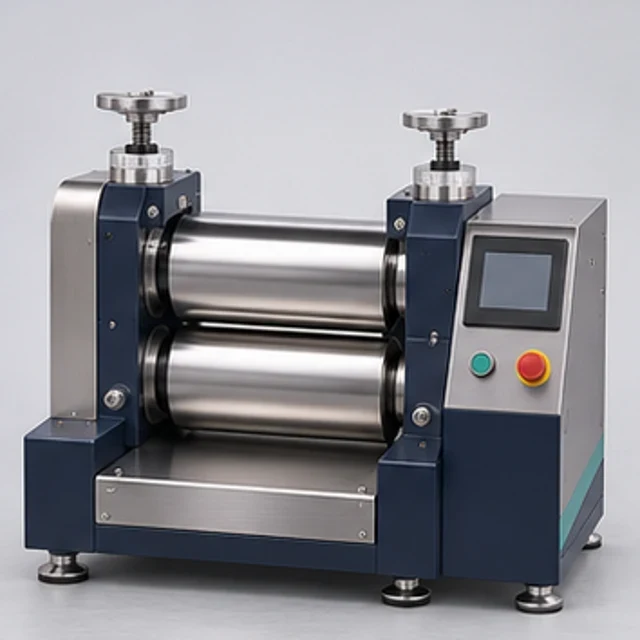
Intended for research densification of coated electrode strips or coupons, with changes in thickness, porosity and coating integrity assessed after rolling.
| Technical Parameter | Indicative Configuration |
|---|---|
| Equipment type | Motorised Laboratory Electrode Roll Press |
| Model variants | AMB-LRC-100 / 150 / 200 |
| Effective rolling width | 100 / 150 / 200 mm |
| Roll diameter | 100 / 100 / 150 mm |
| Roll arrangement | Two counter-rotating horizontal rolls |
| Roll material | Hardened alloy tool steel |
| Roll hardness | Target 58–62 HRC |
| Surface finish | Target Ra ≤0.4 µm |
| Surface coating | Hard chrome or engineered alternative |
| Roll cylindricity | Target ≤0.005 mm, subject to inspection |
| Mechanical nip gap | Adjustable 0–3 mm |
| Gap measurement | Dual dial indicators, 0.01 mm graduation |
| Gap adjustment | Screw-type mechanism with independent side setting |
| Rolling speed | Target 0.1–3 m/min, variable |
| Drive motor | Indicative 0.25–0.75 kW geared motor |
| Speed control | VFD |
| Drive transmission | Positive gear synchronisation |
| Frame structure | Fabricated and machined steel frame |
| Bearings | Precision antifriction bearing arrangement |
| Pressing force | Model/application-dependent; subject to design verification |
| Heating | Optional heated-roll version |
| Heating temperature | Ambient to 120°C target, heated model |
| Temperature control | PID with independent overtemperature protection |
| Electrode thickness checking | External micrometer; inline measurement optional |
| Electrical supply | 230 V / 415 V AC, configuration-dependent |
| Controls | Start/stop, variable speed, direction, inching and emergency stop |
| Safety | Nip guarding, interlocked access, electrical and thermal protection |
| Application | Laboratory Li-ion electrode densification |
Specifications represent preliminary configurable design targets. Final parameters, material compatibility, performance and availability will be confirmed after application review and engineering validation.
Nip-gap settings and indicator graduation do not guarantee final electrode thickness. Pressing force, roll geometry, surface accuracy and density changes require model-specific engineering validation and material trials.
This configurable laboratory calender is intended to reduce electrode coating thickness and increase electrode density through controlled roll-gap adjustment. The proposed standard arrangement uses hardened rolls, precision adjustment screws, a geared motor and VFD. Cold rolling is the base configuration; a heated-roll version is optional. Roll stiffness, alignment, force and material recovery affect the result; no final thickness or density improvement is guaranteed.
Electrode-compaction studies, thickness reduction trials and comparison of anode/cathode coating response. Confirm the intended process, materials and acceptance method during application review.
Mechanical interfaces, operating mode and control requirements are defined during engineering review. Available configuration choices depend on the agreed equipment scope.
The proposed standard drive uses a geared motor with VFD speed control and positive gear synchronisation. Start/stop, direction and inching controls are included in the proposed configuration; the optional heated version adds PID temperature control and independent overtemperature protection.
Electrical supply, compressed air, cooling, exhaust, vacuum, floor loading and controlled-atmosphere requirements must be assessed against the selected configuration.
Pressing force, frame stiffness, roll deflection, alignment, hardness, cylindricity and surface finish require engineering verification and inspection. Electrode cracking, coating adhesion and elastic recovery require material trials. Nip guards, access interlocks and thermal/electrical protection require safety validation; heating targets do not establish uniform roll temperature.
A documented risk assessment, guarding review, material compatibility check and application-specific operating procedure are required before use. No CE, UL, IEC, hazardous-area approval or other certification is established by this listing. Conformity documentation depends on the agreed scope and destination requirements.
Read the Product Information Disclaimer
Request technical documentation and an application-specific configuration with your enquiry.
This equipment is under development. Design details, tested performance and delivery commitments require confirmation. Please request the current engineering and supply status.
Share your materials, required capacity, process constraints and acceptance criteria. The team will review feasibility before confirming any custom scope.
REPRESENTATIVE CONCEPTLaboratory slurry mixing under controlled pressure.
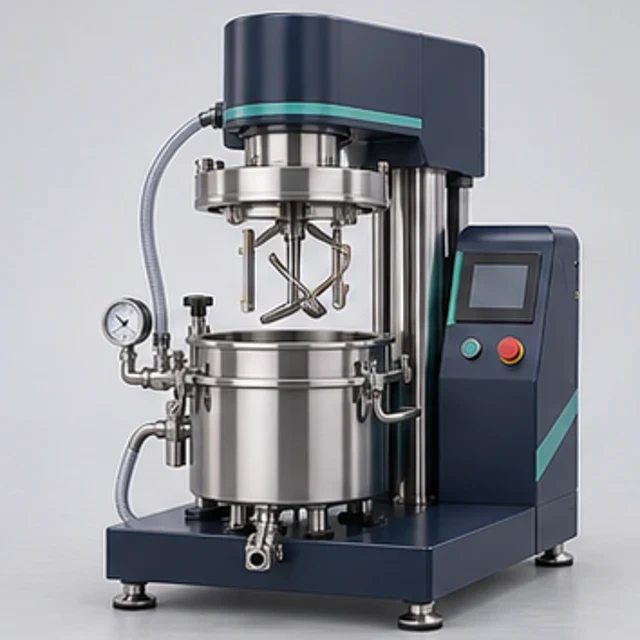 REPRESENTATIVE CONCEPT
Laboratory rotor-stator dispersion.
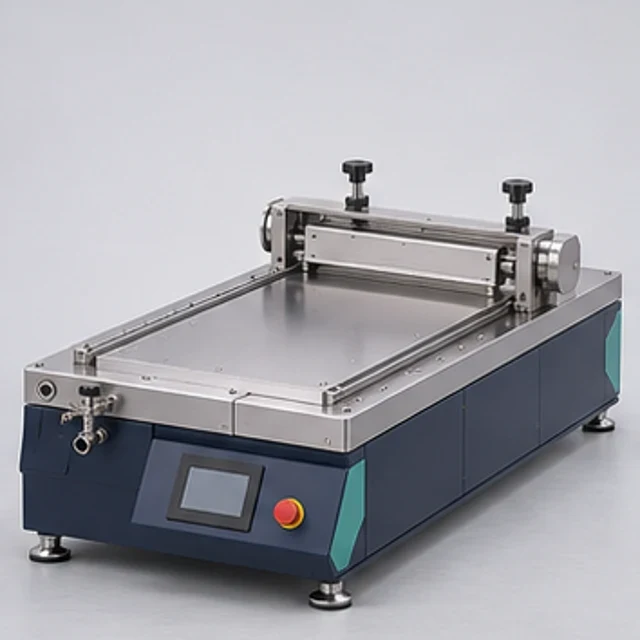 REPRESENTATIVE CONCEPT
Laboratory blade coating of electrode coupons.