
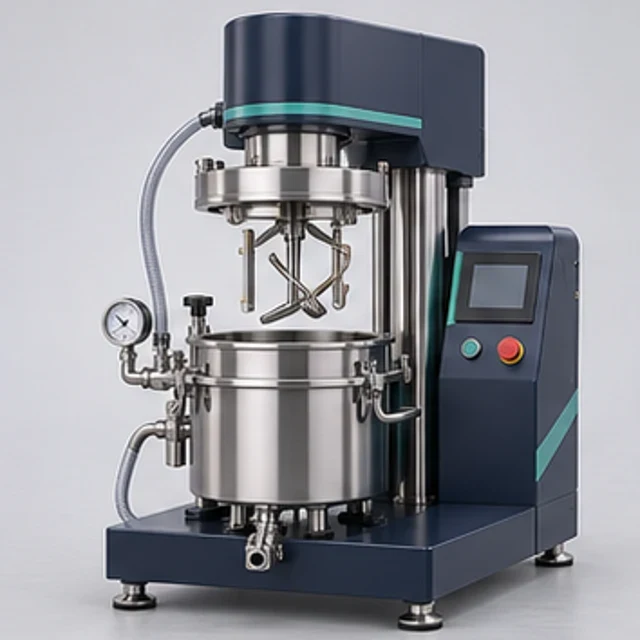
 REPRESENTATIVE CONCEPT
Under Development
Laboratory Vacuum Planetary Mixer
Li-ion Laboratory EquipmentLaboratory slurry mixing under controlled pressure.
AMB-LPM-05Explore equipment ↗
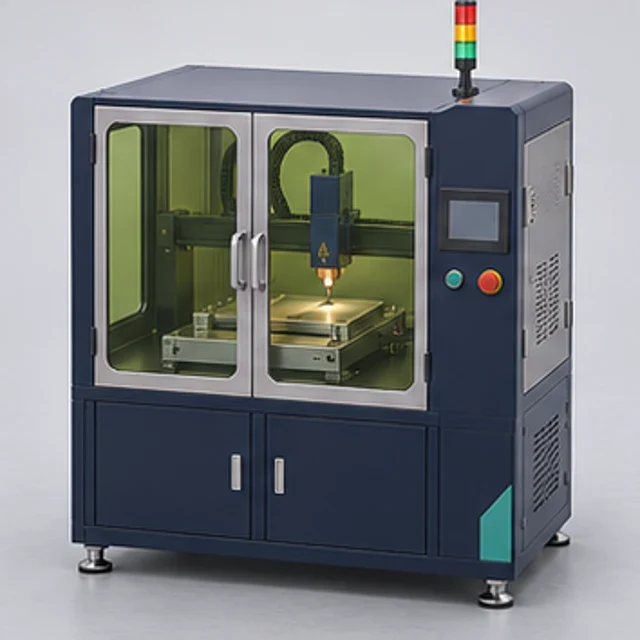
Intended for qualified resistance-joining trials on selected cylindrical-cell components; the exact joint and cell safety condition must be established before a process is proposed.
| Technical Parameter | Indicative Configuration |
|---|---|
| Equipment type | Laboratory cylindrical-cell resistance spot/projection welding station |
| Welding principle | Resistance heating under controlled electrode contact force |
| Proposed configurations | Manual spot / pneumatic bench spot / custom projection fixture |
| Application scope | Selected tab-to-can, cap or component joints after process review |
| Cell format | 18650 / 21700 fixtures proposed; other formats by application |
| Material combinations | Selected nickel, plated steel and other joints only after trials |
| Weld power source | Specialist-selected DC, inverter or capacitive-discharge source |
| Electrical output | Current/energy rating selected for the joint; no universal output claimed |
| Pulse programme | Single/dual or multistep pulses where supported by selected source |
| Weld time | Selected source and process-trial dependent |
| Electrode arrangement | Parallel-gap or opposed configuration, matched to current path |
| Projection welding | Dedicated joint geometry, power source and tooling; custom feasibility review |
| Electrode material | Suitable copper alloy or selected specialist contact material |
| Electrode tips | Replaceable application-specific geometry |
| Contact force | Controlled spring/pneumatic arrangement; force established by trials |
| Weld head actuation | Manual or pneumatic; custom motion optional |
| Pneumatic supply | Proposed 5–7 bar if pneumatic actuation selected |
| Cell fixture | Insulated locating fixture with support close to the joint |
| Position adjustment | Manual mechanical adjustment; indexed positioning optional |
| Current monitoring | Where supported by selected power source |
| Process monitoring | Optional force, displacement and weld-data recording |
| Cooling | Air or water cooling according to selected source and duty |
| Control system | Supplier weld controller; integration PLC/HMI optional |
| Electrical supply | Selected source-approved AC supply; site load confirmed at selection |
| Guarding | Protected actuation, interlocks, emergency isolation and spatter screening |
| Extraction | Application-specific fume/debris extraction provision |
| Joint validation | Strength, resistance, appearance and cell-damage checks using actual samples |
| Application | Laboratory cylindrical-cell component joining and fixture/process development |
Technical specifications are indicative and configurable. Final equipment parameters, performance, compatibility and supply arrangements will be confirmed following application review and engineering evaluation.
| Model | Principal Capacity / Range | Configuration | Intended Application |
|---|---|---|---|
| AMB-CSW-M | Joint-specific electrical output | Manual spot head and insulated fixture | Laboratory tab/contact joining trials |
| AMB-CSW-P | Selected source and pneumatic head | Controlled bench actuation; optional monitoring | Repeat laboratory joining sequences |
| AMB-CSW-X | Customer joint and projection geometry | Custom projection tooling and selected source | Application-specific cap/component development |
The configurations are proposed integration routes, not validated power-source ratings. Current, energy, pulse duration, contact force, tab thickness and duty require selection of the actual source/head and sample trials. Spot and projection welding need different joint/tooling assessment; a spot head is not automatically suitable for projection work. No guaranteed weld strength, resistance, layer count or production capacity is established.
Application-specific equipment solutions combine mechanical engineering, automation integration and specialised subsystems. A selected resistance-welding source and contact head apply a qualified pulse sequence under controlled force to an agreed cylindrical-cell joint. Fixtures and current paths are defined for the sample. Custom projection joining is a separate feasibility-based tooling and process option; specialist welding electronics are selected for the application.
Cylindrical component joining studies, cap/tab process development and compatible resistance-welded connections. Confirm the intended process, materials and acceptance method during application review.
Mechanical interfaces, operating mode and control requirements are defined during engineering review. Available configuration choices depend on the agreed equipment scope.
A selected supplier weld controller handles the electrical pulse. Pneumatic actuation, monitoring, indexed motion and PLC/HMI integration are optional configuration choices.
Final equipment selection, utilities, site interfaces and supply feasibility are established during application review. This enquiry-led listing does not establish current stock, completed manufacture or testing, dispatch availability, or an appointed specialist supplier.
Cell state, insulation, unintended current paths, short circuits, seal heating and thermal-runaway hazards require assessment before joining. Source/head electrical ratings, cooling, contact force, fixture insulation, guarded actuation and fume/spatter controls require review. Weld strength, electrical resistance and damage limits need representative trials. Supplier conformity documents do not automatically establish assembled-system certification.
A documented risk assessment, guarding review, material compatibility check and application-specific operating procedure are required before use. No CE, UL, IEC, hazardous-area approval or other certification is established by this listing. Conformity documentation depends on the agreed scope and destination requirements.
Read the Product Information Disclaimer
Request technical documentation and an application-specific configuration with your enquiry.
This listing represents an intended equipment or engineering offering. Feasibility, configuration and availability require confirmation. Please request the current engineering and supply status.
Share your materials, required capacity, process constraints and acceptance criteria. The team will review feasibility before confirming any custom scope.
REPRESENTATIVE CONCEPTLaboratory slurry mixing under controlled pressure.
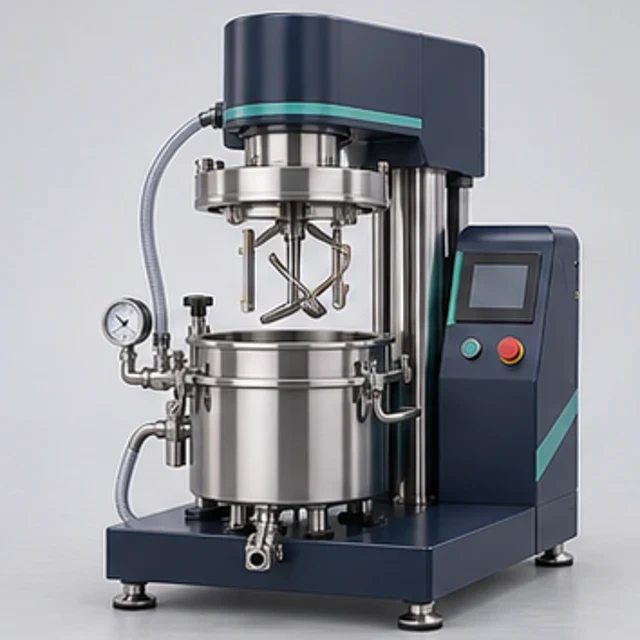 REPRESENTATIVE CONCEPT
Laboratory rotor-stator dispersion.
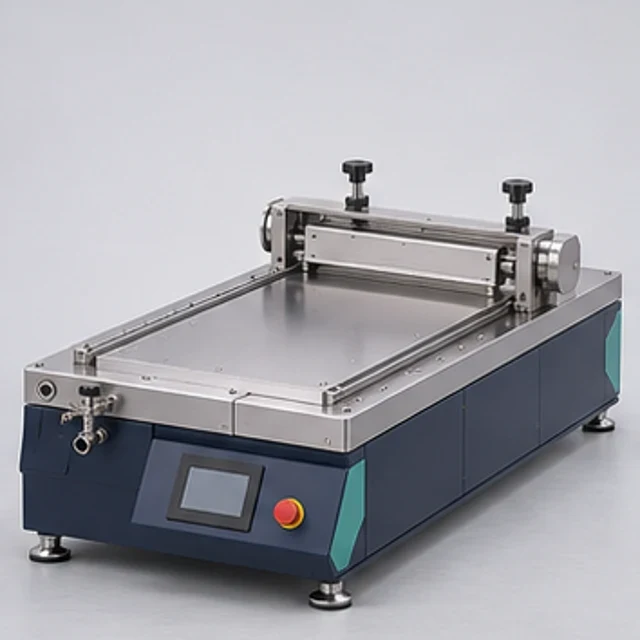 REPRESENTATIVE CONCEPT
Laboratory blade coating of electrode coupons.