
 REPRESENTATIVE CONCEPT
Under Development
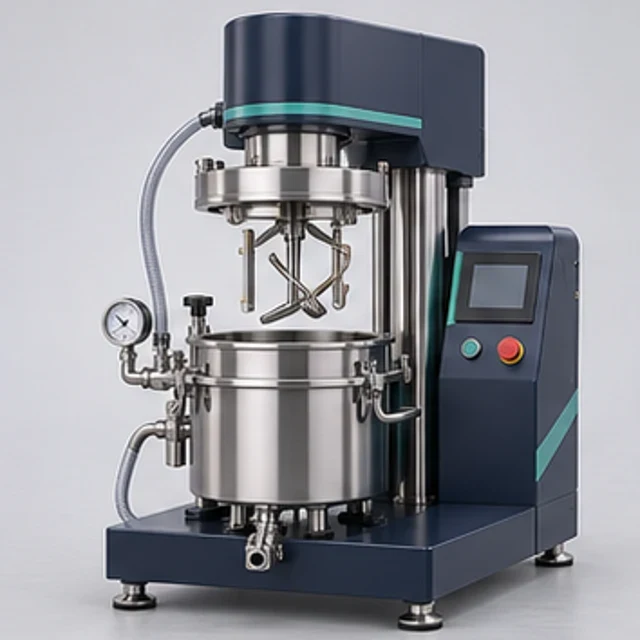
Laboratory Vacuum Planetary Mixer
Li-ion Laboratory EquipmentLaboratory slurry mixing under controlled pressure.
AMB-LPM-05Explore equipment ↗
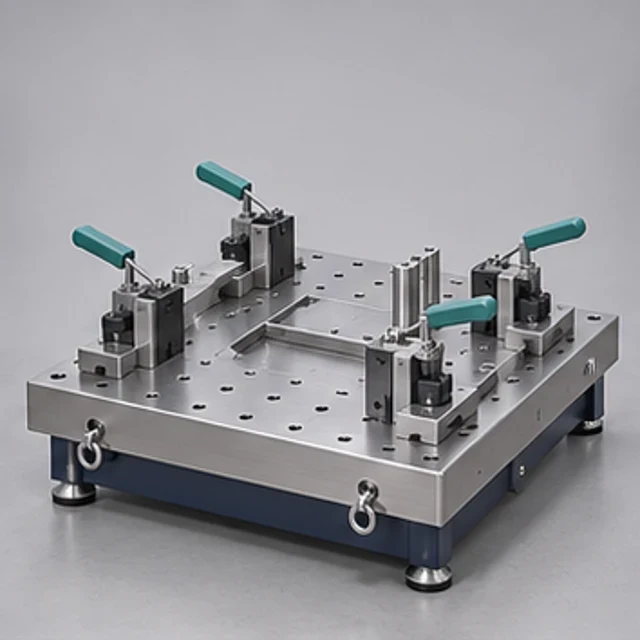
Intended to discuss tooling for opening selected coin-cell cases during post-test examination; cell deactivation, electrolyte exposure and sample recovery need a separate safe procedure.
| Technical Parameter | Indicative Configuration |
|---|---|
| Equipment type | Laboratory Coin Cell Disassembling Machine |
| Standard cell formats | CR2016 / CR2025 / CR2032 |
| Optional cell formats | CR2325 / CR2450, dedicated dies |
| Operating method | Manual mechanical / hydraulic |
| Hydraulic capacity | Up to 8-tonne actuator class, optional model |
| Actual working force | Set by die and application |
| Opening mechanism | Guided separator die arrangement |
| Main frame | Fabricated/machined steel |
| Ram guidance | Precision guide arrangement |
| Die material | Hardened alloy tool steel |
| Tool hardness | Proposed 56–60 HRC |
| Die arrangement | Interchangeable matched dies |
| Die changeover | Removable tool set |
| Cell positioning | Precision locating pocket |
| Punch travel | Approx. 15–30 mm, model-dependent |
| Return mechanism | Spring / hydraulic return |
| Actuation | Manual lever / hydraulic pump |
| Operating controls | Manual, no PLC required |
| Sample collection | Removable collection tray |
| Tool alignment | Dowelled/located die holders |
| Surface finish | Corrosion-resistant industrial finish |
| Installation | Benchtop |
| Electrical requirement | None for manual variants |
| Optional accessories | Additional dies and collection fixtures |
| Safety | Guarded opening zone and controlled ram return |
| Application | Opening laboratory coin cells for examination |
Specifications indicate preliminary equipment configurations. Final technical parameters, performance, material compatibility and supply arrangements will be confirmed following application review and detailed engineering.
The optional up-to-8-tonne hydraulic actuator class is not a validated cell-opening force. Actual working force and travel depend on the die, cell and application. Manual mechanical and manual hydraulic variants require no electrical power; neither establishes that opening a used cell is safe.
Compact precision equipment is intended for controlled opening of laboratory coin cells, with interchangeable tooling for selected CR-series cell formats. A guided separator die and suitable cell-locating pocket support manual mechanical or optional hydraulic actuation. The proposed mechanism is for controlled disassembly, not crushing; suitable cells and an approved laboratory procedure are required.
Post-test electrode examination, failure investigation and recovery of selected research-cell components. Confirm the intended process, materials and acceptance method during application review.
Mechanical interfaces, operating mode and control requirements are defined during engineering review. Available configuration choices depend on the agreed equipment scope.
Manual lever or hydraulic-pump actuation uses a guided ram and interchangeable matched dies. Manual variants need no PLC, HMI or electrical supply. Additional dies and collection fixtures are optional.
Configuration, component selection and supply feasibility follow the customer application review. Mechanical assemblies, specialist subsystems and integration are confirmed for the agreed scope. Utilities and facility interfaces depend on the selected configuration. This enquiry-led listing does not establish stock, completed manufacture or testing, immediate dispatch, or a confirmed supplier partnership.
Used cells may expose electrolyte, reactive electrodes and stored electrical energy during opening. State of charge, atmosphere, contamination, fire risk and sample condition require assessment under an approved laboratory procedure. Guarding, controlled ram return, tooling alignment and any hydraulic pressure relief require validation. Proprietary competitor die construction must not be reproduced.
A documented risk assessment, guarding review, material compatibility check and application-specific operating procedure are required before use. No CE, UL, IEC, hazardous-area approval or other certification is established by this listing. Conformity documentation depends on the agreed scope and destination requirements.
Read the Product Information Disclaimer
Request technical documentation and an application-specific configuration with your enquiry.
This listing represents an intended equipment or engineering offering. Feasibility, configuration and availability require confirmation. Please request the current engineering and supply status.
Share your materials, required capacity, process constraints and acceptance criteria. The team will review feasibility before confirming any custom scope.
REPRESENTATIVE CONCEPTLaboratory slurry mixing under controlled pressure.
 REPRESENTATIVE CONCEPT
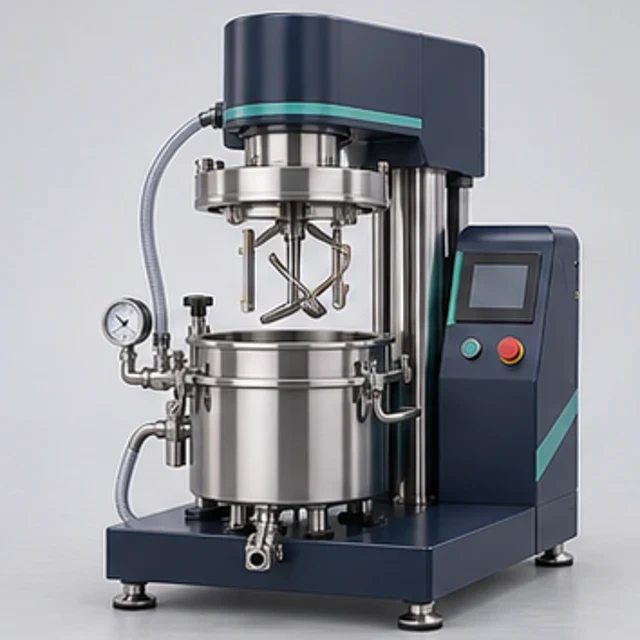
Laboratory rotor-stator dispersion.
 REPRESENTATIVE CONCEPT
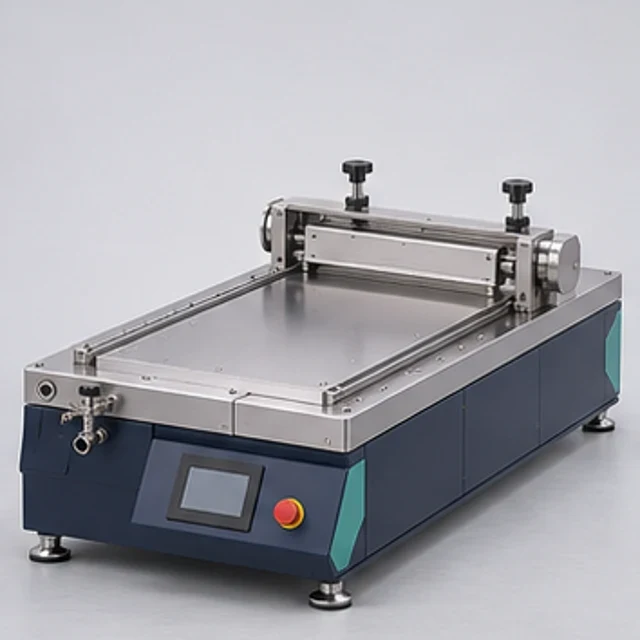
Laboratory blade coating of electrode coupons.