
 REPRESENTATIVE CONCEPT
Under Development
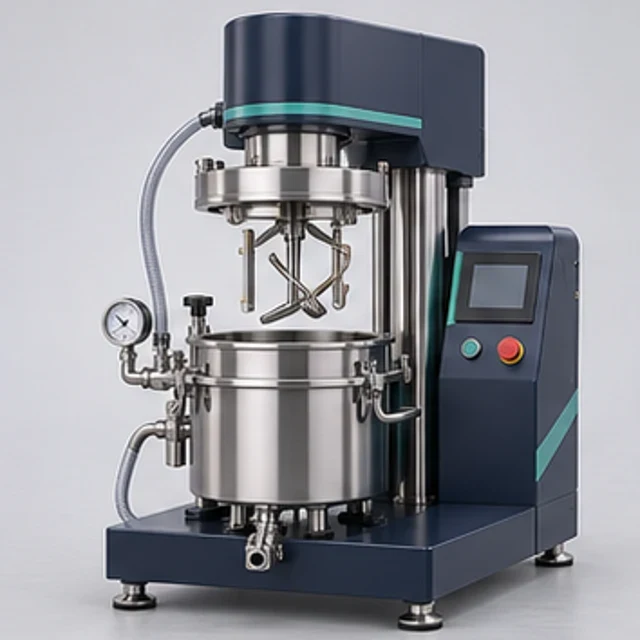
Laboratory Vacuum Planetary Mixer
Li-ion Laboratory EquipmentLaboratory slurry mixing under controlled pressure.
AMB-LPM-05Explore equipment ↗
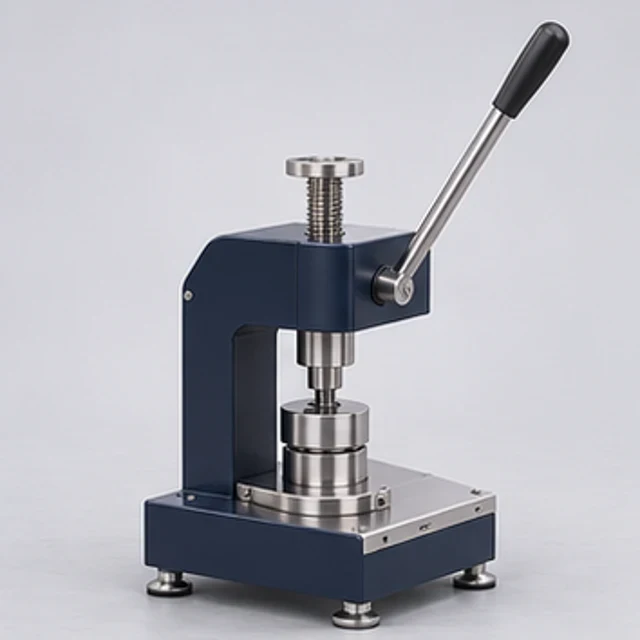
Intended for closing compatible laboratory coin-cell cases after electrode, separator, electrolyte and spacer assembly. Hardware fit and seal validation must be established for each cell design.
| Parameter | Indicative Configuration |
|---|---|
| Machine type | Laboratory Coin Cell Crimping Machine |
| Model variants | AMB-LCC-H / P / E |
| Compatible coin cells | CR2016 / CR2025 / CR2032 |
| Optional formats | CR2325 / CR2450 with dedicated dies |
| Standard actuation | Manual hydraulic |
| Hydraulic press capacity | Target up to 8 metric tonnes |
| Sealing force adjustment | Application-dependent |
| Hydraulic control | Pressure gauge and relief arrangement |
| Pneumatic supply | 0.6–0.8 MPa, optional model |
| Electric actuation | Optional controlled electric actuator |
| Force monitoring | Load cell with digital display, optional |
| Die arrangement | Interchangeable matched upper/lower dies |
| Die material | Hardened alloy tool steel |
| Die hardness | Target 56–60 HRC |
| Ram guidance | Precision guided linear movement |
| Working stroke | Target 20–30 mm, model-dependent |
| Crimp-height adjustment | Adjustable mechanical stop |
| Electrical insulation | Insulating die insert where required |
| Cell handling | Manual loading; assisted ejection optional |
| Frame construction | Rigid machined/fabricated steel frame |
| Installation | Laboratory benchtop |
| Glove-box compatibility | Optional pneumatic/electric design, subject to validation |
| Electrical supply | Not required for manual hydraulic model |
| Safety | Die-point protection, pressure relief and appropriate powered-actuation interlocks |
| Applications | Coin-cell assembly and laboratory sealing |
Specifications represent preliminary configurable design targets. Final parameters, material compatibility, performance and availability will be confirmed after application review and engineering validation.
The manual hydraulic model is the standard configuration. Pneumatic and electric models are proposed optional development variants, subject to engineering confirmation. Hydraulic press capacity is a preliminary design target, not a validated cell-sealing force; the closure setting must suit the cell hardware and stack.
This compact laboratory coin-cell crimper is intended for sealing compatible CR-series coin cells during battery research and development. The standard configuration uses manual hydraulic operation without electrical power, with a precision guided ram, replaceable matched dies and a machined/fabricated steel frame. Die alignment, crimp height and the closure setting must be matched to the cell hardware; a closed case does not establish a validated leak-tight seal.
CR-series coin-cell assembly, laboratory sealing and evaluation of closure tooling for battery research and development. Confirm the intended process, materials and acceptance method during application review.
Mechanical interfaces, operating mode and control requirements are defined during engineering review. Available configuration choices depend on the agreed equipment scope.
The standard manual hydraulic model uses mechanical actuation with a pressure gauge and relief arrangement. Pneumatic and controlled electric actuation are separate proposed options. Load-cell monitoring is optional and selected only where application requirements justify it; powered variants require an appropriate validated control and interlock arrangement.
The standard manual hydraulic model requires no electrical supply. The optional pneumatic model has a proposed supply of 0.6–0.8 MPa. Electrical, pneumatic and glove-box interfaces for the optional development variants require configuration-specific engineering confirmation.
Press capacity, working stroke, die hardness, guidance, crimp height and cell-specific sealing force require engineering validation and trials with the selected case, gasket and stack. Leak-tightness and crimping accuracy are not guaranteed. Powered variants require die-point guarding and control/interlock validation. Glove-box fit, materials and actuation interfaces require validation; no certified glove-box compatibility or commercial availability is established.
A documented risk assessment, guarding review, material compatibility check and application-specific operating procedure are required before use. No CE, UL, IEC, hazardous-area approval or other certification is established by this listing. Conformity documentation depends on the agreed scope and destination requirements.
Read the Product Information Disclaimer
Request technical documentation and an application-specific configuration with your enquiry.
This equipment is under development. Design details, tested performance and delivery commitments require confirmation. Please request the current engineering and supply status.
Share your materials, required capacity, process constraints and acceptance criteria. The team will review feasibility before confirming any custom scope.
REPRESENTATIVE CONCEPTLaboratory slurry mixing under controlled pressure.
 REPRESENTATIVE CONCEPT
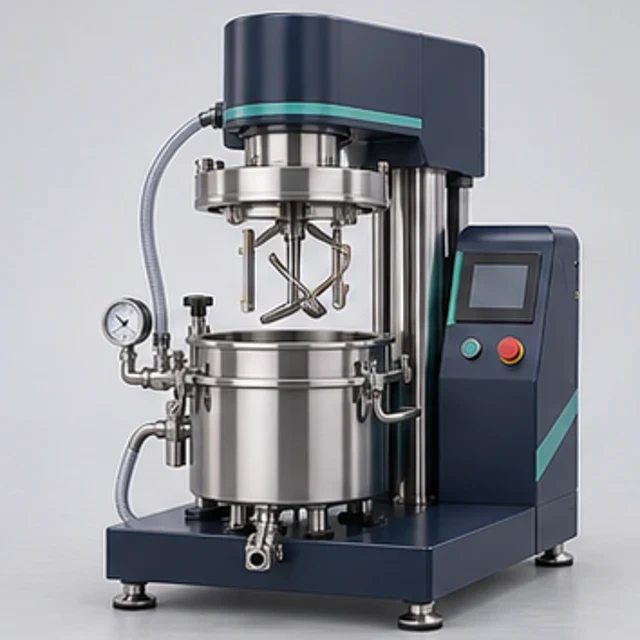
Laboratory rotor-stator dispersion.
 REPRESENTATIVE CONCEPT
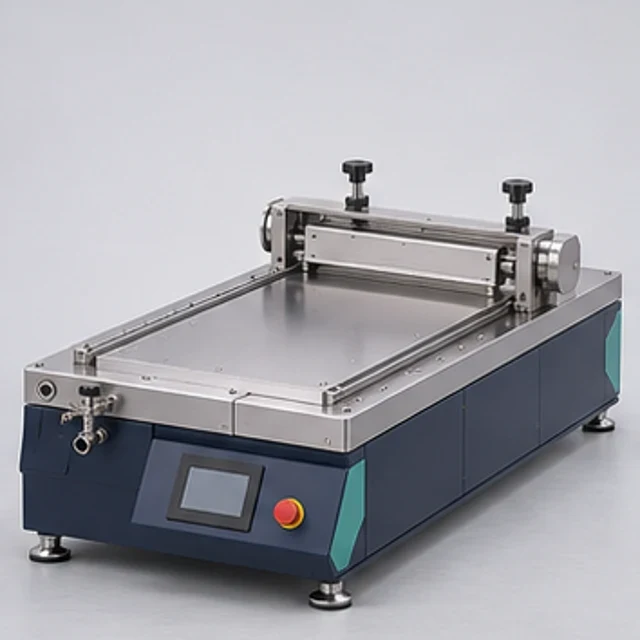
Laboratory blade coating of electrode coupons.