
 REPRESENTATIVE CONCEPT
Planned
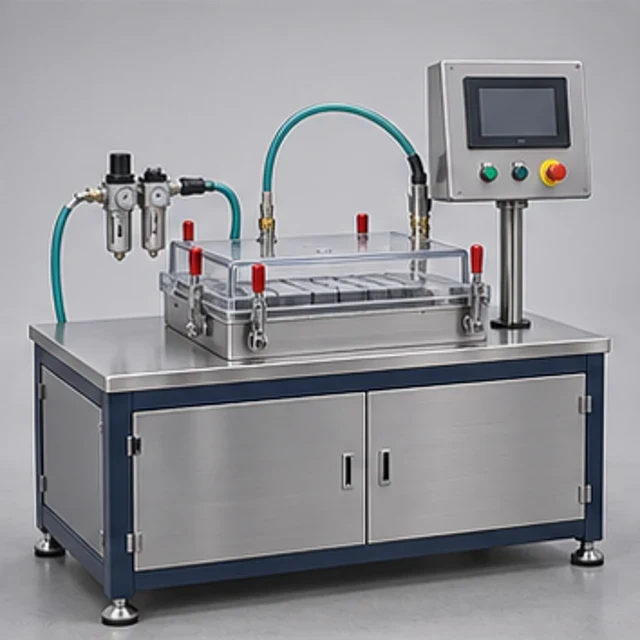
Air Leakage Tester for Batteries
Inspection & Quality ControlBattery enclosure air-leak testing.
AMB-ALT-01Explore equipment ↗
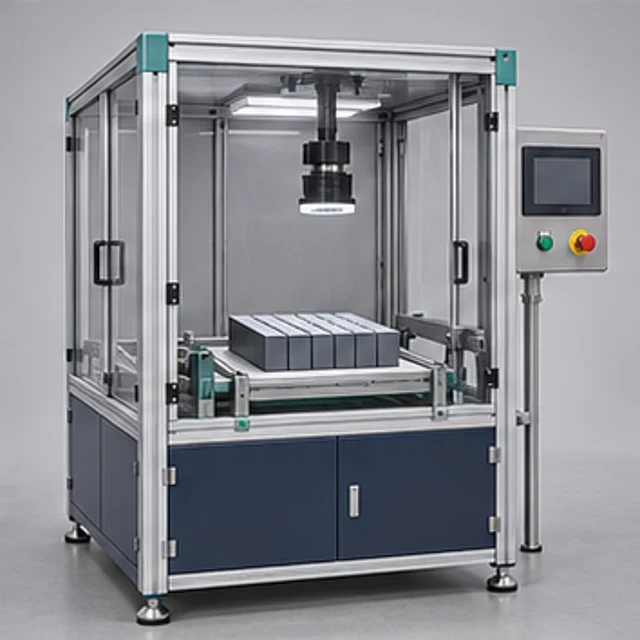
Intended to inspect explicitly defined surface or dimensional features on electrodes or cells using a selected imaging arrangement and validated decision criteria.
| Technical Parameter | Indicative Configuration |
|---|---|
| Inspection application | Selected cell-surface or electrode-web inspection task |
| Product type | Customer-defined cell, foil/coating or component format |
| Product dimensional envelope | Application-specific size envelope (mm) |
| Inspection area/field of view | Field of view (mm) selected for defect list and imaging geometry |
| Camera type | Selected area-scan/line-scan or other suitable camera |
| Sensor resolution | Selected sensor pixels; not guaranteed detectable defect size |
| Lens selection | Lens matched to field, working distance and required image quality |
| Working distance | Application-specific optical distance/clearance (mm) |
| Lighting configuration | Controlled lighting selected for actual surface and reflection |
| Image acquisition trigger | Part sensor, encoder or agreed station trigger |
| Image capture rate | Selected camera/exposure/interface rate; whole-system performance validated separately |
| Mechanical positioning | Manual nest or selected repeatable positioning |
| Conveyor/indexing integration | Optional transport/index interface and motion synchronisation |
| Defect categories | Customer-approved visible defect catalogue with examples |
| Defect size acceptance method | Agreed measurement/labelled-sample method and acceptance, not pixel-size inference |
| Algorithm/rule-based inspection | Selected rule-based algorithms and controlled settings |
| AI-assisted option, where justified | Optional AI assistance only with suitable data and validation |
| Image storage | Optional image/result retention and agreed storage policy |
| Defect classification | Customer-defined categories and review/uncertain handling |
| Pass/fail/reject interface | Agreed reject/hold/confirm handshake; fail-safe handling assessed |
| PLC communication | Supported controller interface selected for scope |
| HMI/operator review | Optional operator review and authorised recipe settings |
| Barcode traceability | Optional serial/image/result association |
| Electrical supply | Selected cameras, lighting and controller power |
| Validation method and sample requirements | Representative good/bad/edge-case samples, independent validation and agreed error metrics |
Technical specifications indicate configurable equipment solutions. Final capabilities, operating parameters, instrumentation, performance and supply arrangements will be confirmed following application review and detailed engineering.
Pixel count, pixel size and camera resolution are not guaranteed defect-detection capability. Accuracy, minimum defect size, false accepts/rejects and AI performance require representative, independently validated sample sets. AI is optional and not automatically included.
Application-specific solutions combine mechanical engineering and automation integration with selected specialist subsystems. Proposed configurations include Manual assisted camera inspection; Automated cell-surface inspection; Electrode-web vision inspection integration. Only the explicitly selected configuration and operations form the agreed scope. This enquiry-led listing does not establish completed manufacture, installations, inventory or a confirmed supplier appointment.
Electrode coating-surface checks, cell appearance studies and selected assembly-feature verification. Confirm the intended process, materials and acceptance method during application review.
Mechanical interfaces, operating mode and control requirements are defined during engineering review. Available configuration choices depend on the agreed equipment scope.
Pixel count, pixel size and camera resolution are not guaranteed defect-detection capability. Accuracy, minimum defect size, false accepts/rejects and AI performance require representative, independently validated sample sets. AI is optional and not automatically included.
Electrical, communication and any compressed-air/conditioning requirements follow the actual selected components and site interfaces. Basic manual fixtures do not automatically include PLCs, servo drives or HMI systems. Utilities, optional modules and integration responsibilities are confirmed in the technical scope.
False positives; lighting stability; training data. Pixel count, pixel size and camera resolution are not guaranteed defect-detection capability. Accuracy, minimum defect size, false accepts/rejects and AI performance require representative, independently validated sample sets. AI is optional and not automatically included. Customer-approved acceptance, application-specific risk assessment and appropriate safeguards are required before operation or substitution.
A documented risk assessment, guarding review, material compatibility check and application-specific operating procedure are required before use. No CE, UL, IEC, hazardous-area approval or other certification is established by this listing. Conformity documentation depends on the agreed scope and destination requirements.
Read the Product Information Disclaimer
Request technical documentation and an application-specific configuration with your enquiry.
This listing represents an intended equipment or engineering offering. Feasibility, configuration and availability require confirmation. Please request the current engineering and supply status.
Share your materials, required capacity, process constraints and acceptance criteria. The team will review feasibility before confirming any custom scope.
REPRESENTATIVE CONCEPTBattery enclosure air-leak testing.
 REPRESENTATIVE CONCEPT
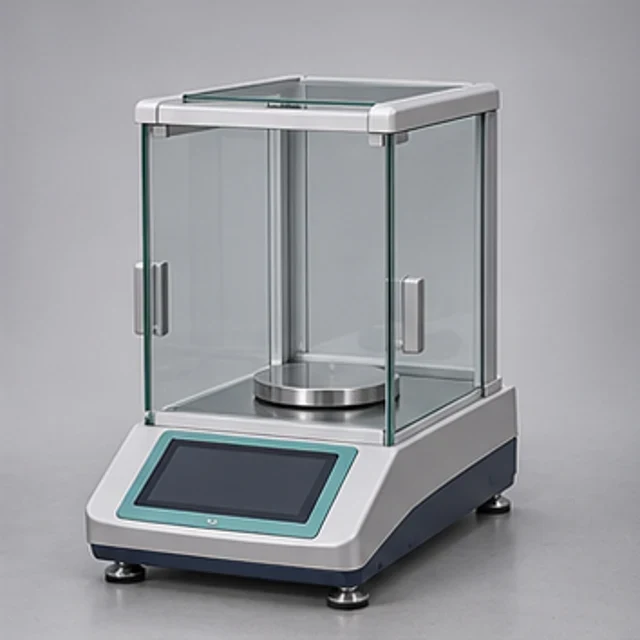
Insulation resistance and dielectric test review.
 REPRESENTATIVE CONCEPT
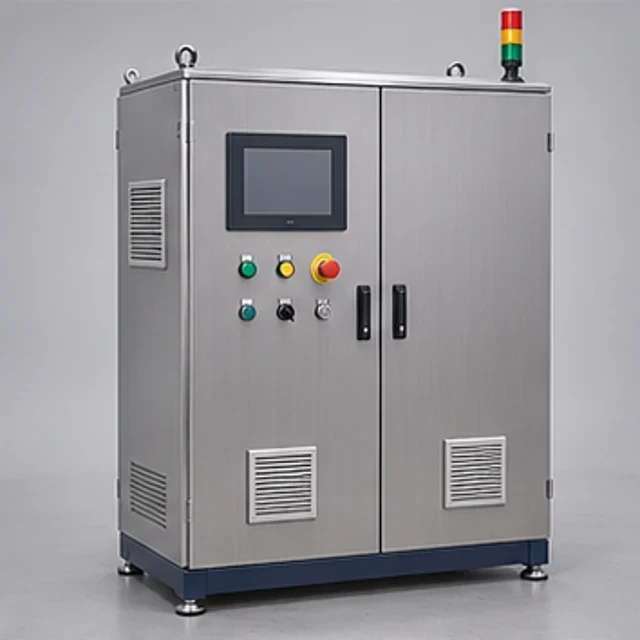
Battery-process data acquisition.