
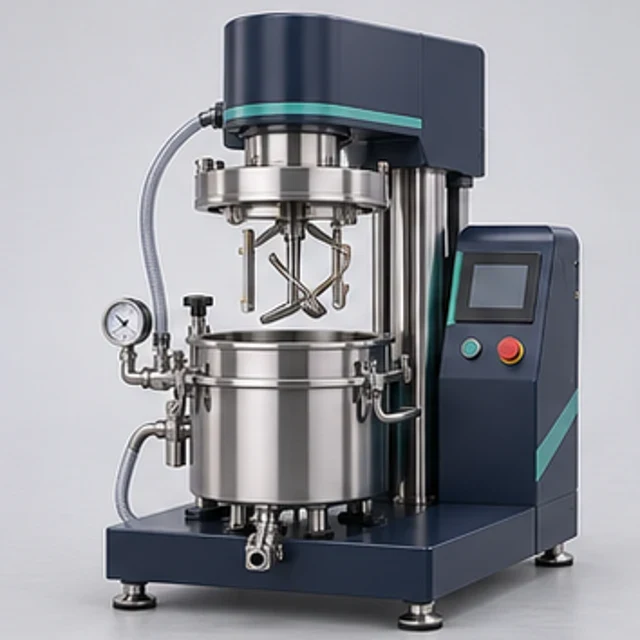
 REPRESENTATIVE CONCEPT
Planned
Vacuum Planetary Mixer (100–200 L)
Li-ion Electrode ManufacturingLarger-batch electrode slurry process review.
AMB-VPM-150Explore equipment ↗
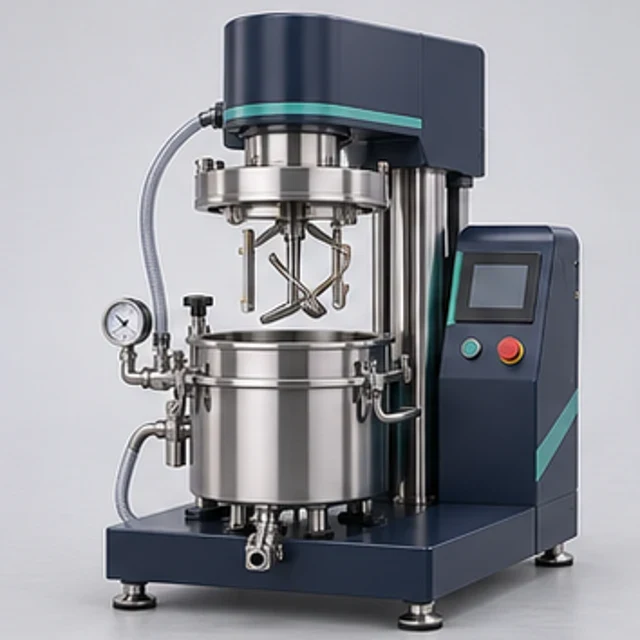
Intended for pilot electrode-slurry batches that bridge formulation research and coating trials, with transfer, reproducibility and cleaning considered as part of the batch process.
| Technical Parameter | Indicative Configuration |
|---|---|
| Equipment type | Vacuum Planetary Mixer (10–50 L Pilot) |
| Intended application | Pilot-batch vacuum slurry mixing |
| Process principle | Planetary agitation disperses the selected material while a qualified pressure programme addresses entrained gas. Scale-up must consider circulation, torque, thermal load and discharge; laboratory results do not establish pilot performance. |
| Proposed configurations | Pilot jacketed batch / Removable vessel / Closed-transfer option |
| Usable charge | Customer slurry mass/usable volume, distinct from vessel design volume |
| Agitation | Selected planetary agitators and wall-contact arrangement |
| Drive | Torque-sized planetary gearbox and motor; speed range selected after rheology review |
| Vacuum circuit | Compatible pump, isolation and vapour trap; pressure stated absolute |
| Vessel | Selected stainless steel and compatible seals |
| Thermal management | Optional jacket and selected heat-transfer service |
| Powder addition | Controlled charging with dust containment interface |
| Discharge | Selected vessel outlet/transfer compatible with slurry rheology |
| Instrumentation | Selected speed, temperature and optional torque/pressure monitoring |
| Cleaning | Accessible wetted assemblies and defined chemistry changeover |
| Sizing and capacity basis | Application-specific; finalised after technical review. Relevant units: L/batch; kg/batch; Pa·s at stated shear; N·m; rpm; mbar absolute. No rating is inferred from the machine ID. |
| Control architecture | Selected process/instrument controls; integration PLC/HMI only where justified by the agreed scope. |
| Utilities and installation | Power, air/hydraulics, thermal services and exhaust only as applicable to the selected scope; site requirements confirmed in the technical offer. |
| Service and configuration changes | Accessible service interfaces and controlled tooling/recipe changes for the agreed process; cleaning/contamination requirements application-specific. |
| Safety and process limits | Solvent ignition, vacuum vessel, dust charging, lifting and cleaning. Safeguards and required conformity route need competent application-specific assessment. |
| Acceptance basis | Agreed drawings/material samples and measurable process acceptance for usable wet batch; solids/rheology; torque/speed; vacuum; heat rejection; discharge. Actual trials and selected-component evidence required before a performance commitment. |
Technical specifications are indicative and configurable. Final equipment parameters, performance, compatibility and supply arrangements will be confirmed following application review and detailed engineering.
Configurations are alternatives or separately selected options, not universal inclusions. Final scope depends on the actual process, materials and selected components; no capacity, precision, yield, delivery or certification is established by this listing. The volume range in the historical name is nominal identity only; usable batch capacity requires validation.
Application-specific machinery combining mechanical engineering, automation integration and selected specialist subsystems. Planetary agitation disperses the selected material while a qualified pressure programme addresses entrained gas. Scale-up must consider circulation, torque, thermal load and discharge; laboratory results do not establish pilot performance. The exact selected configuration and supply feasibility are established after enquiry qualification; this is not an assertion of completed manufacture or available stock.
Pilot electrode development, trial slurry production and scale-up comparison against laboratory formulations. Confirm the intended process, materials and acceptance method during application review.
Mechanical interfaces, operating mode and control requirements are defined during engineering review. Available configuration choices depend on the agreed equipment scope.
Standard and optional operations are separated in the technical offer. Specialist technology, instrumentation and safety functions require selected-equipment evidence and appropriate integration validation.
Installation scope and facility responsibilities are agreed for the actual process. No unselected utility plant, environmental-control system, process recipe or complete turnkey facility is automatically included.
Solvent ignition, vacuum vessel, dust charging, lifting and cleaning. Configurations are alternatives or separately selected options, not universal inclusions. Final scope depends on the actual process, materials and selected components; no capacity, precision, yield, delivery or certification is established by this listing. The volume range in the historical name is nominal identity only; usable batch capacity requires validation. No verified performance, supplier appointment or certification is established by this catalogue entry.
A documented risk assessment, guarding review, material compatibility check and application-specific operating procedure are required before use. No CE, UL, IEC, hazardous-area approval or other certification is established by this listing. Conformity documentation depends on the agreed scope and destination requirements.
Read the Product Information Disclaimer
Request technical documentation and an application-specific configuration with your enquiry.
This equipment is under development. Design details, tested performance and delivery commitments require confirmation. Please request the current engineering and supply status.
Share your materials, required capacity, process constraints and acceptance criteria. The team will review feasibility before confirming any custom scope.
REPRESENTATIVE CONCEPTLarger-batch electrode slurry process review.
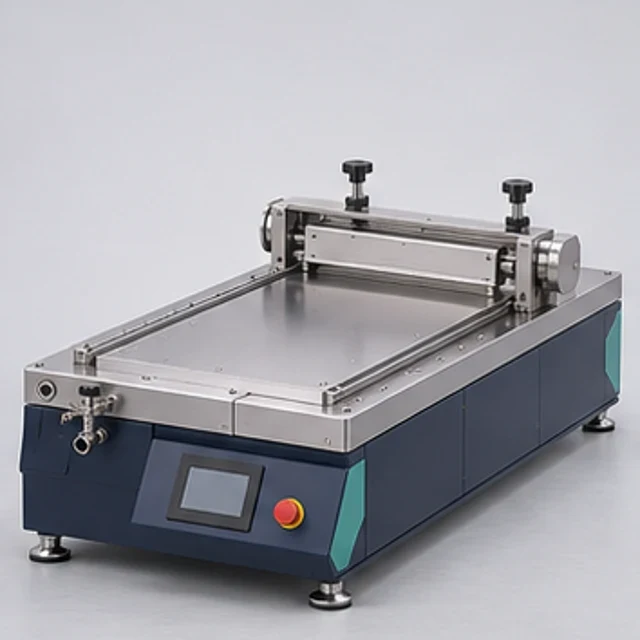 REPRESENTATIVE CONCEPT
Pilot roll-to-roll electrode coating.
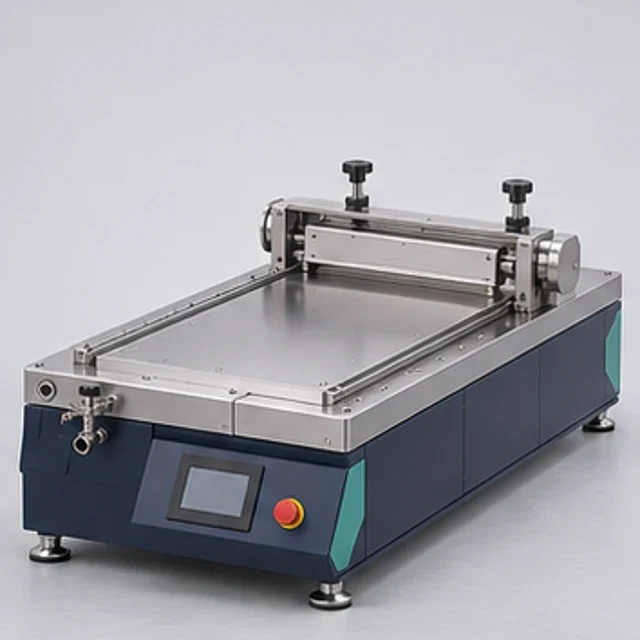 REPRESENTATIVE CONCEPT
Pilot-web slot-die coating.