
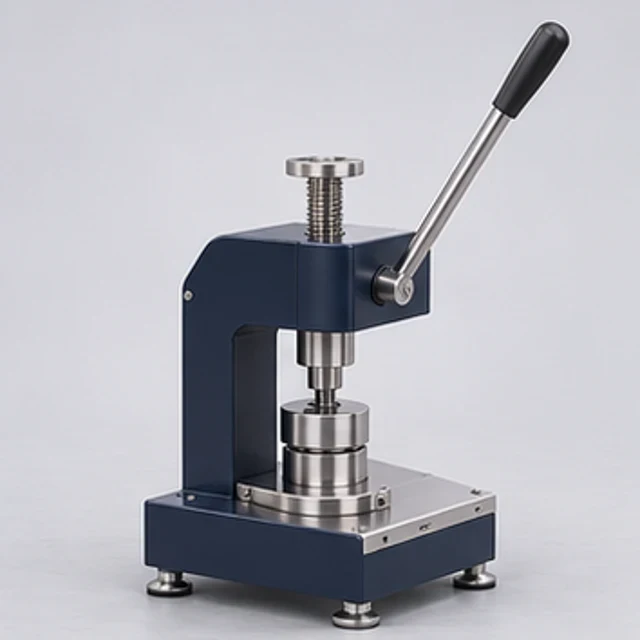
 REPRESENTATIVE CONCEPT
Planned
Module Compression / Fixturing Press
Module AssemblyModule stack compression and holding.
AMB-MCP-01Explore equipment ↗
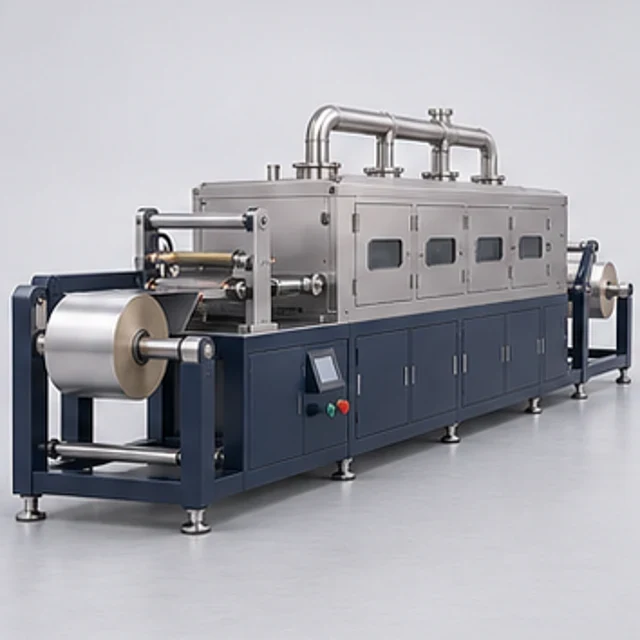
Intended to define module assembly operations around approved cells, mechanical retention and interconnections, with the automation boundary derived from the module design.
| Technical Parameter | Indicative Configuration |
|---|---|
| Cell format compatibility | Customer-selected cylindrical, prismatic or pouch-cell design; validated fixtures required |
| Module configuration | Defined module electrical/mechanical arrangement per customer design |
| Module dimensions | Application-specific module envelope (mm) |
| Module weight | Module mass (kg) and handling limits defined by design |
| Number of assembly stations | Single workstation or selected linked stations; count agreed in scope |
| Cell/module loading method | Manual standard; assisted/automated loading optional |
| Cell orientation and locating | Custom nests/stops with orientation checks |
| Compression/holding fixture | Selected holding/compression fixture; not every station includes a press |
| Compression force control | Customer-authorised cell loads; force control/monitoring as selected |
| Cell spacing and alignment | Drawing-based spacing/alignment; no universal tolerance |
| Mechanical fastener assembly | Manual tools or selected assisted fastening |
| Busbar positioning | Application-specific insulated busbar locating fixtures |
| Joining technology integration | Selected specialist welding/joining module optional; not automatically included |
| Thermal pad/TIM installation | Manual placement or optional separately engineered dispensing |
| Insulation placement | Customer insulation parts and verified placement sequence |
| Module transfer system | Manual trolley or selected station-to-station transfer |
| Conveyor/pallet option | Optional conveyor/pallet interfaces |
| Torque-tool integration | Optional selected torque tool and result capture |
| Vision/presence checks | Optional vision/presence checks validated with samples |
| Barcode and traceability | Optional cell/module ID association and process records |
| PLC/HMI and recipes | Manual guidance standard; PLC/HMI and recipes for selected scope |
| Module cycle-time basis | Derived from selected operations, handling and acceptance trials; not product ID |
| Electrical/pneumatic utilities | Project-specific component power and compressed air |
| Electrical isolation and guarding | Safe cell state, insulation protection, guarded force/motion and isolation |
| Acceptance testing and exclusions | Operation-specific FAT/SAT; cell design, formation, module certification and unselected operations excluded |
Technical specifications indicate configurable equipment solutions. Final capabilities, operating parameters, instrumentation, performance and supply arrangements will be confirmed following application review and detailed engineering.
A workstation is not a complete assembly line. Only explicitly selected operations are included; welding, TIM dispensing, tests and automatic transfers are optional modules. Customer cell design and load limits govern assembly. Line supply does not certify the battery module.
Application-specific solutions combine mechanical engineering and automation integration with selected specialist subsystems. Proposed configurations include Manual assisted module assembly workstation; Semi-automatic module assembly station; Modular multi-station module assembly line. Only the explicitly selected configuration and operations form the agreed scope. This enquiry-led listing does not establish completed manufacture, installations, inventory or a confirmed supplier appointment.
Module prototyping, assisted-station development and feasibility planning of a selected module assembly line. Confirm the intended process, materials and acceptance method during application review.
Mechanical interfaces, operating mode and control requirements are defined during engineering review. Available configuration choices depend on the agreed equipment scope.
A workstation is not a complete assembly line. Only explicitly selected operations are included; welding, TIM dispensing, tests and automatic transfers are optional modules. Customer cell design and load limits govern assembly. Line supply does not certify the battery module.
Electrical, communication and any compressed-air/conditioning requirements follow the actual selected components and site interfaces. Basic manual fixtures do not automatically include PLCs, servo drives or HMI systems. Utilities, optional modules and integration responsibilities are confirmed in the technical scope.
Cell variation; thermal integration; safety. A workstation is not a complete assembly line. Only explicitly selected operations are included; welding, TIM dispensing, tests and automatic transfers are optional modules. Customer cell design and load limits govern assembly. Line supply does not certify the battery module. Customer-approved acceptance, application-specific risk assessment and appropriate safeguards are required before operation or substitution.
A documented risk assessment, guarding review, material compatibility check and application-specific operating procedure are required before use. No CE, UL, IEC, hazardous-area approval or other certification is established by this listing. Conformity documentation depends on the agreed scope and destination requirements.
Read the Product Information Disclaimer
Request technical documentation and an application-specific configuration with your enquiry.
This listing represents an intended equipment or engineering offering. Feasibility, configuration and availability require confirmation. Please request the current engineering and supply status.
Share your materials, required capacity, process constraints and acceptance criteria. The team will review feasibility before confirming any custom scope.
REPRESENTATIVE CONCEPTModule stack compression and holding.
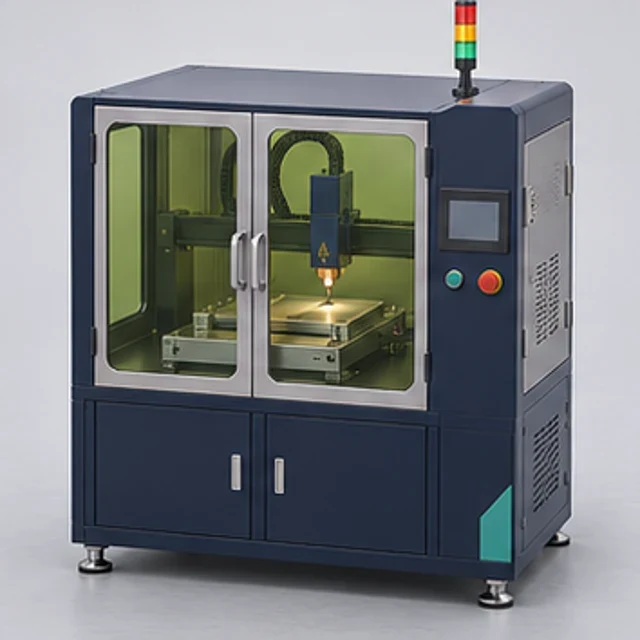 REPRESENTATIVE CONCEPT
Module busbar laser joining.
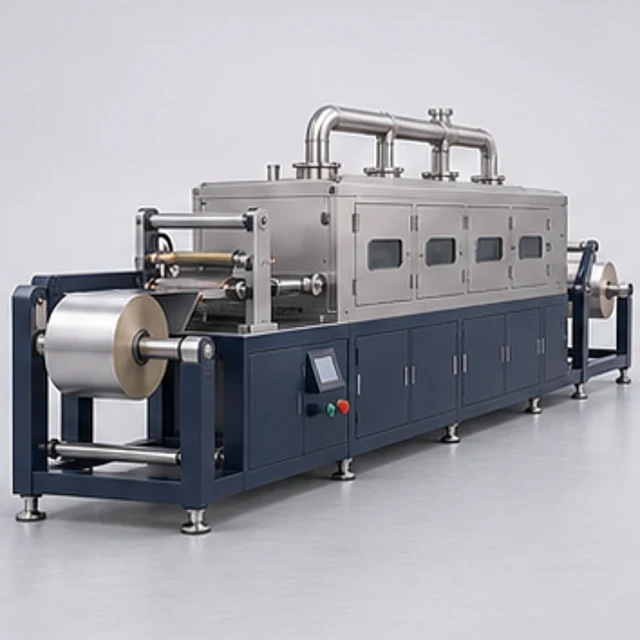 REPRESENTATIVE CONCEPT
Semi-automatic coin-cell process integration.