
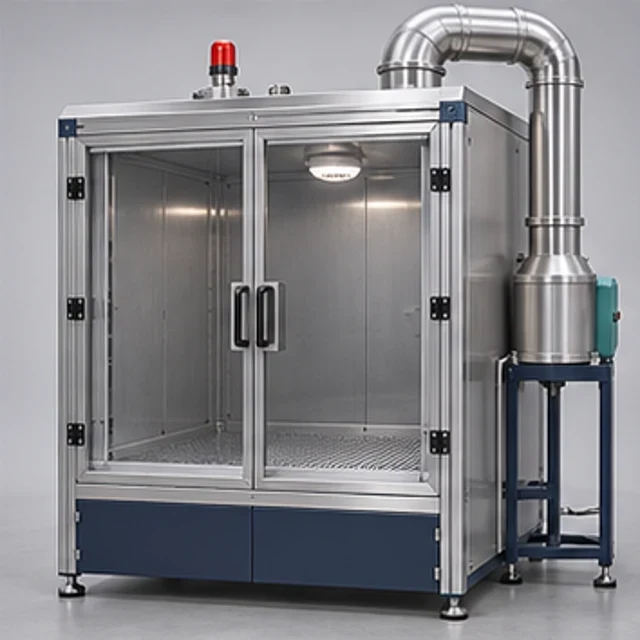
 REPRESENTATIVE CONCEPT
Partner-Supplied
Explosion-Proof Electrical & Ventilation
Battery Safety EquipmentHazardous-atmosphere electrical and ventilation review.
AMB-EXP-01Explore equipment ↗
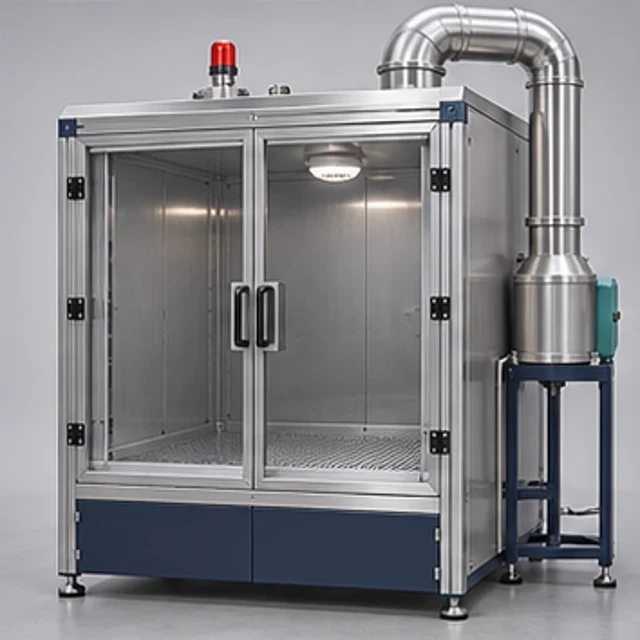
Intended for qualified fire-engineering review of detection, alarm, containment and response around a defined battery hazard. The listing does not establish that any agent prevents thermal runaway or is suitable for every chemistry.
| Technical Parameter | Indicative Configuration |
|---|---|
| Equipment type | Battery Fire Suppression / Detection System |
| Intended application | Battery fire detection and response engineering |
| Process principle | Selected sensors detect defined abnormal conditions and initiate an approved response. Battery failure can involve heat, flammable/toxic gas and re-ignition; protection requires a site-specific strategy beyond selecting a suppression device. |
| Proposed configurations | Detection/alarm / Engineered suppression interface / Compartment strategy |
| Hazard definition | Actual cells, energy, inventory and process scenarios |
| Protected area | Customer layout, compartment and exposure boundaries |
| Strategy | Competent fire/battery-hazard specialist design |
| Detection | Selected suitable sensors and alarm logic |
| Response | Defined shutdown, isolation, evacuation and fire-service interfaces |
| Agent system | Specialist engineered suppression selection, if suitable |
| Gas hazards | Ventilation and toxic/flammable gas scenario review |
| Propagation | No universal prevention/containment claim |
| Residue/runoff | Application-specific collection and environmental response |
| Evidence | Selected equipment, installation and maintenance/acceptance documentation |
| Sizing and capacity basis | Application-specific; finalised after technical review. Relevant units: protected m²/m³; kWh exposure; detector coverage; flow/duration as designed. No rating is inferred from the machine ID. |
| Control architecture | Selected process/instrument controls; integration PLC/HMI only where justified by the agreed scope. |
| Utilities and installation | Power, air/hydraulics, thermal services and exhaust only as applicable to the selected scope; site requirements confirmed in the technical offer. |
| Service and configuration changes | Accessible service interfaces and controlled tooling/recipe changes for the agreed process; cleaning/contamination requirements application-specific. |
| Safety and process limits | No universal extinguishment, propagation prevention, insurer acceptance or compliance claim. Safeguards and required conformity route need competent application-specific assessment. |
| Acceptance basis | Agreed drawings/material samples and measurable process acceptance for hazard inventory; detection; response; isolation; agent delivery; runoff; maintenance. Actual trials and selected-component evidence required before a performance commitment. |
Technical specifications are indicative and configurable. Final equipment parameters, performance, compatibility and supply arrangements will be confirmed following application review and detailed engineering.
Configurations are alternatives or separately selected options, not universal inclusions. Final scope depends on the actual process, materials and selected components; no capacity, precision, yield, delivery or certification is established by this listing. No universal fire extinction, thermal-runaway prevention, insurer acceptance or regulatory approval is implied.
Equipment configurations and specialised technologies selected according to project requirements, with supply feasibility confirmed during technical evaluation. Selected sensors detect defined abnormal conditions and initiate an approved response. Battery failure can involve heat, flammable/toxic gas and re-ignition; protection requires a site-specific strategy beyond selecting a suppression device. The exact selected configuration and supply feasibility are established after enquiry qualification; this is not an assertion of completed manufacture or available stock.
Specialist safety assessment of battery test/storage/process areas and integration of an approved detection/response design. Confirm the intended process, materials and acceptance method during application review.
Mechanical interfaces, operating mode and control requirements are defined during engineering review. Available configuration choices depend on the agreed equipment scope.
Standard and optional operations are separated in the technical offer. Specialist technology, instrumentation and safety functions require selected-equipment evidence and appropriate integration validation.
Installation scope and facility responsibilities are agreed for the actual process. No unselected utility plant, environmental-control system, process recipe or complete turnkey facility is automatically included.
No universal extinguishment, propagation prevention, insurer acceptance or compliance claim. Configurations are alternatives or separately selected options, not universal inclusions. Final scope depends on the actual process, materials and selected components; no capacity, precision, yield, delivery or certification is established by this listing. No universal fire extinction, thermal-runaway prevention, insurer acceptance or regulatory approval is implied. No verified performance, supplier appointment or certification is established by this catalogue entry.
A documented risk assessment, guarding review, material compatibility check and application-specific operating procedure are required before use. No CE, UL, IEC, hazardous-area approval or other certification is established by this listing. Conformity documentation depends on the agreed scope and destination requirements.
Read the Product Information Disclaimer
Request technical documentation and an application-specific configuration with your enquiry.
Intended partner-supply route only. No named partner appointment, authorisation, available machine, scope or delivery is confirmed by this listing. Please request the current engineering and supply status.
Share your materials, required capacity, process constraints and acceptance criteria. The team will review feasibility before confirming any custom scope.